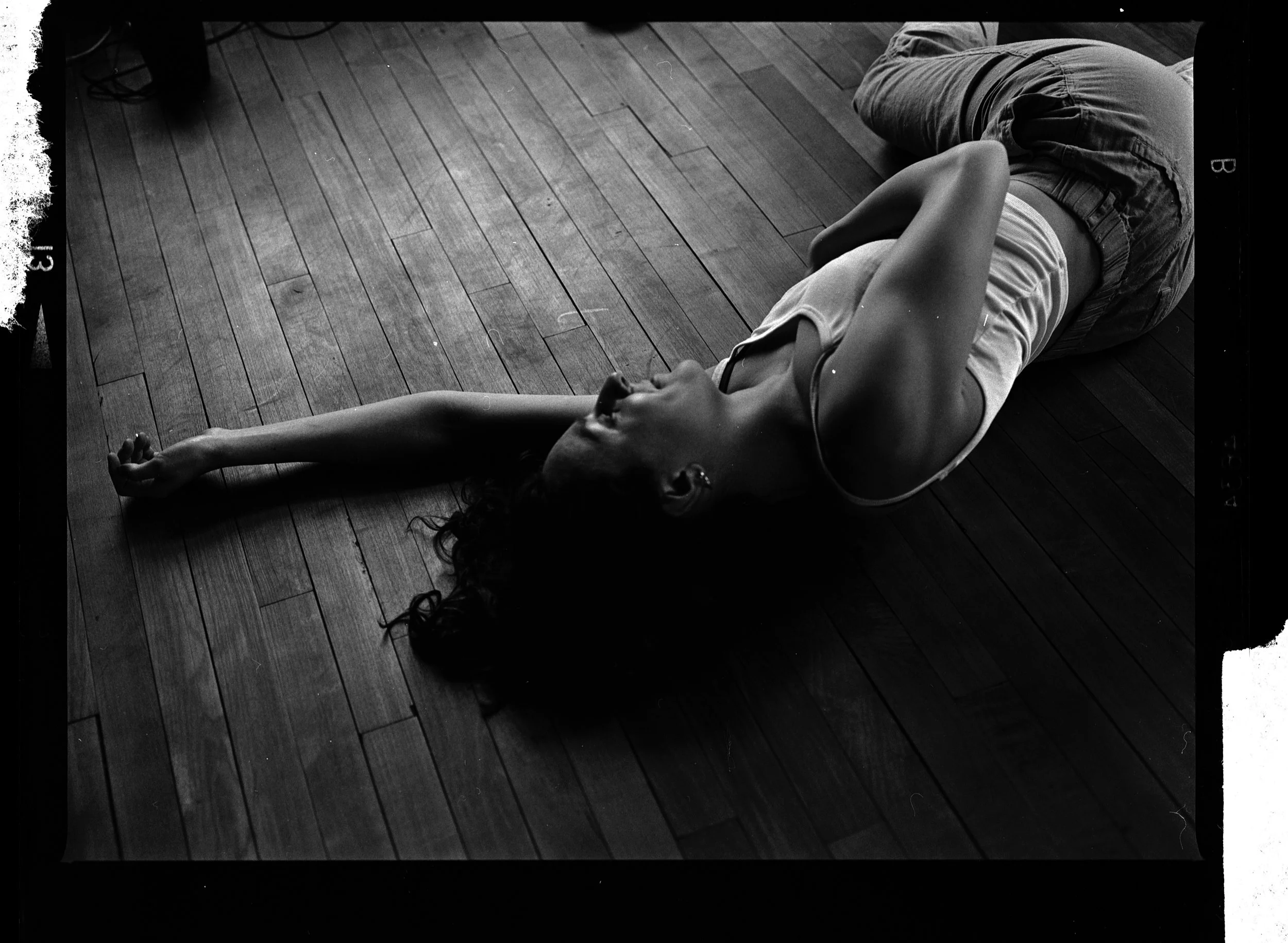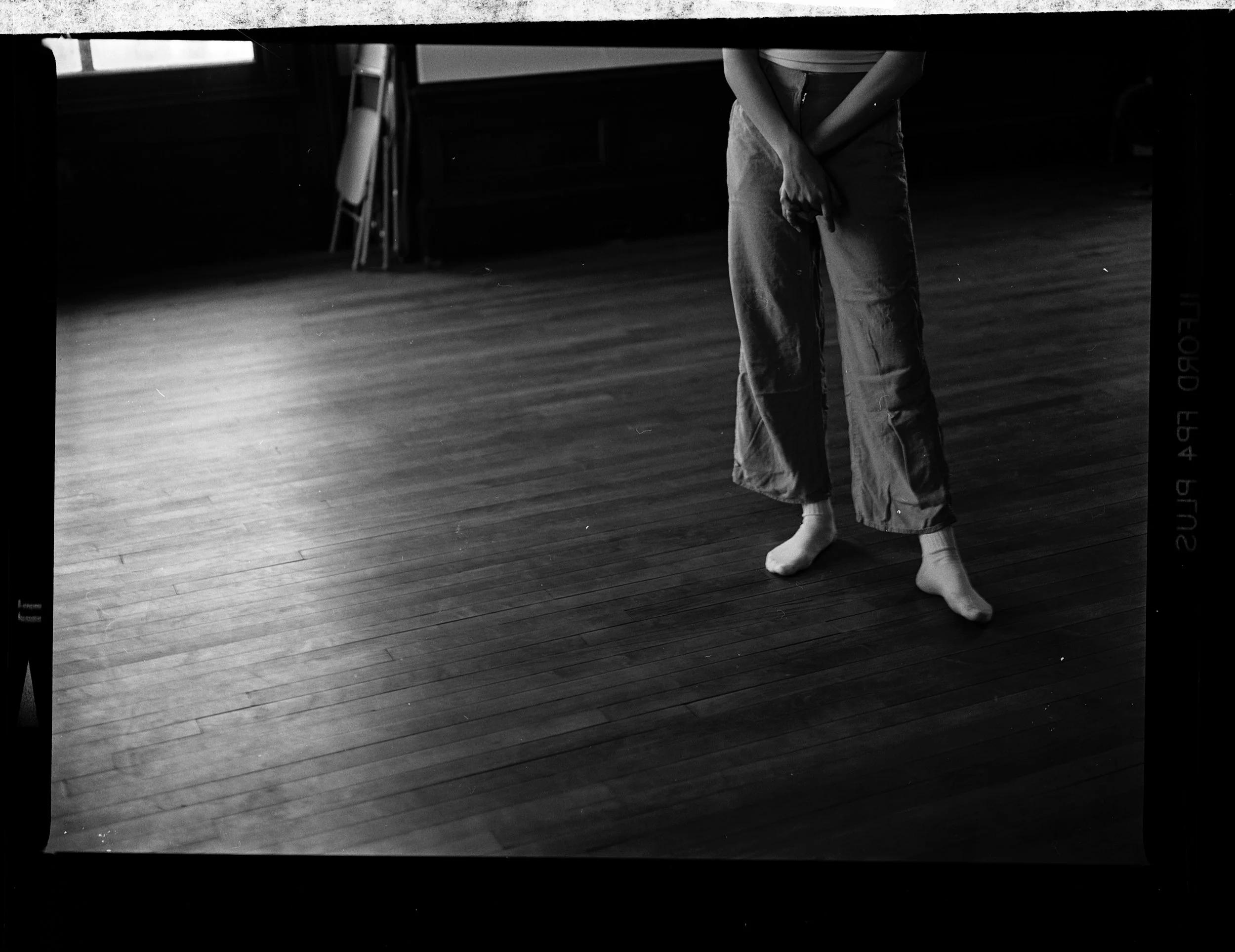
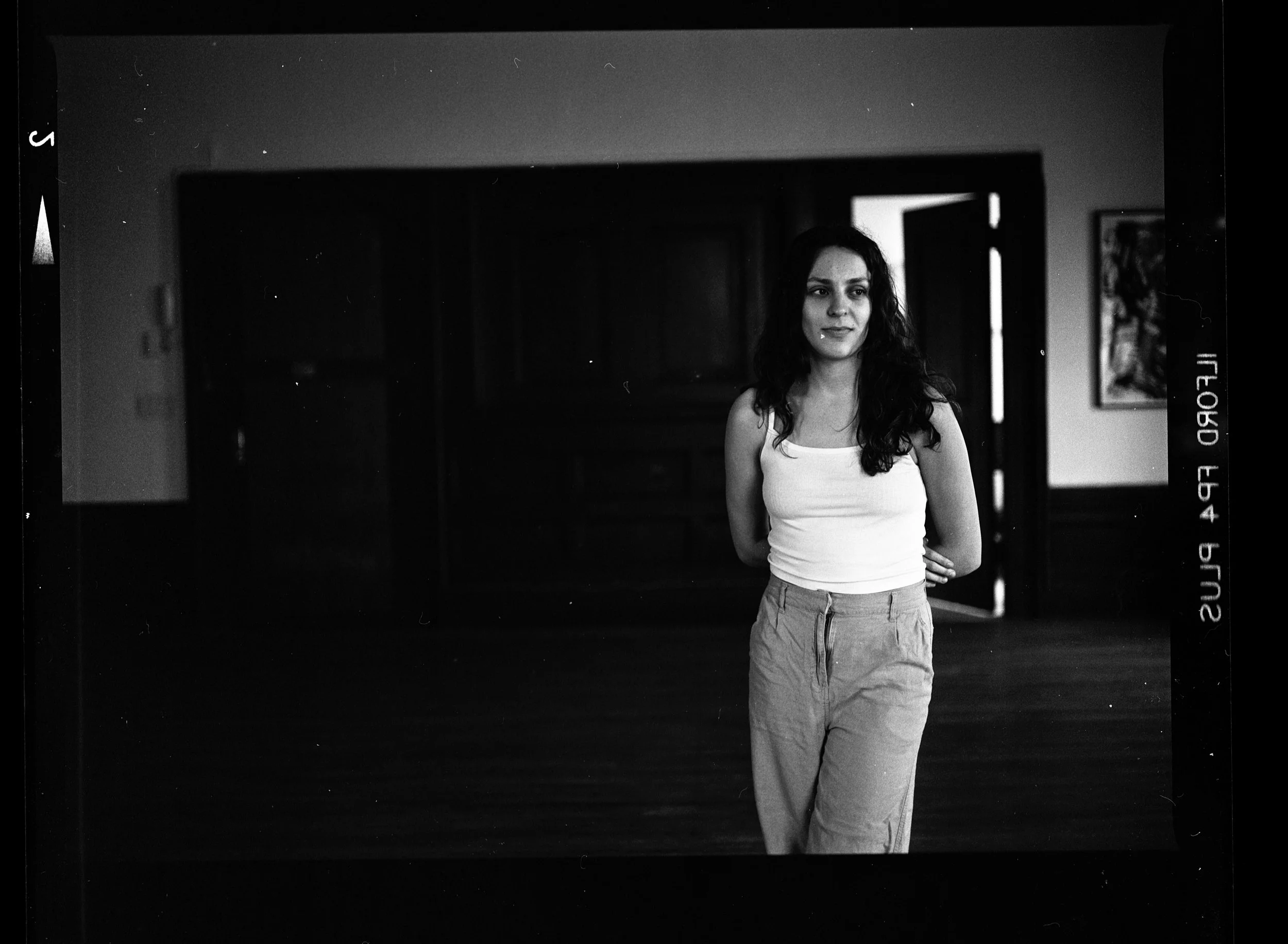
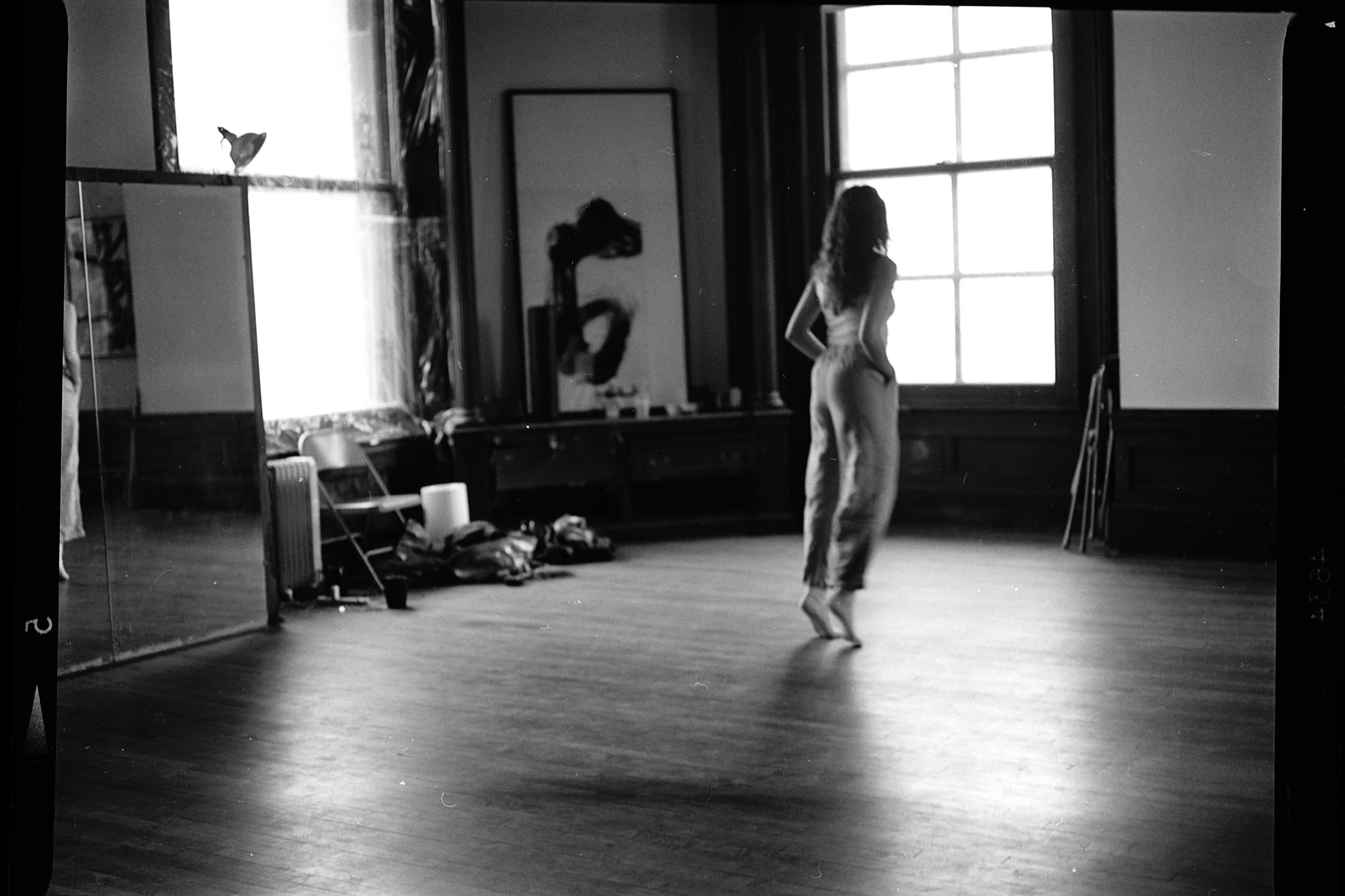
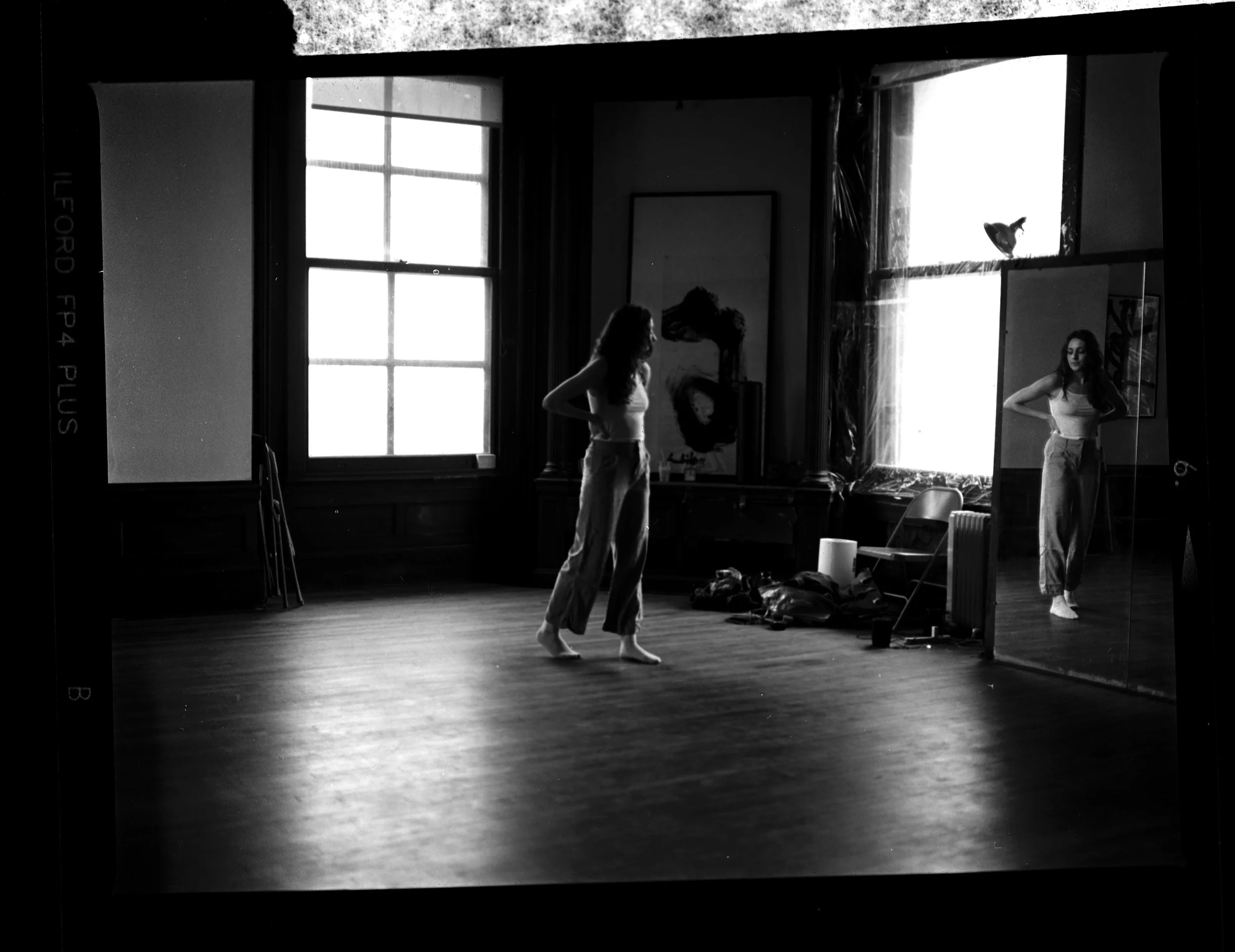
What does it mean to look at everyday movements as systems of choreographies— can dance be used as a process based approach to observe and interact with light in different ways? Contemporary Dance through Natalie is one such way to approach light, with sound being the activating element in each work she performs. The task was simple— to dance according to the lighting in the space— and to use original music composed in a space that no longer exists to bring about a new one.
When asked what sort of music she would need in order to create movement, Natalie responded with
‘I can dance to anything.’
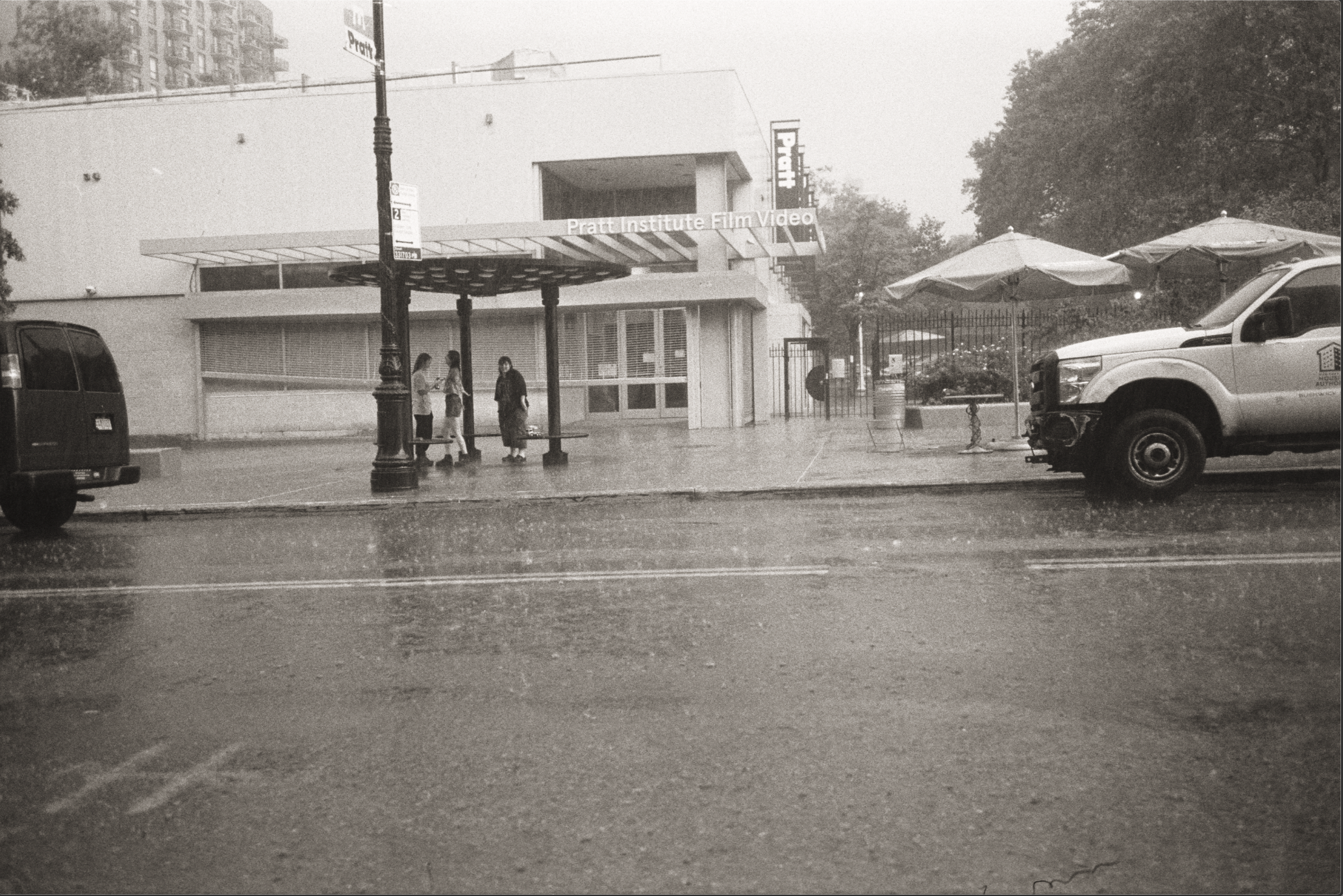
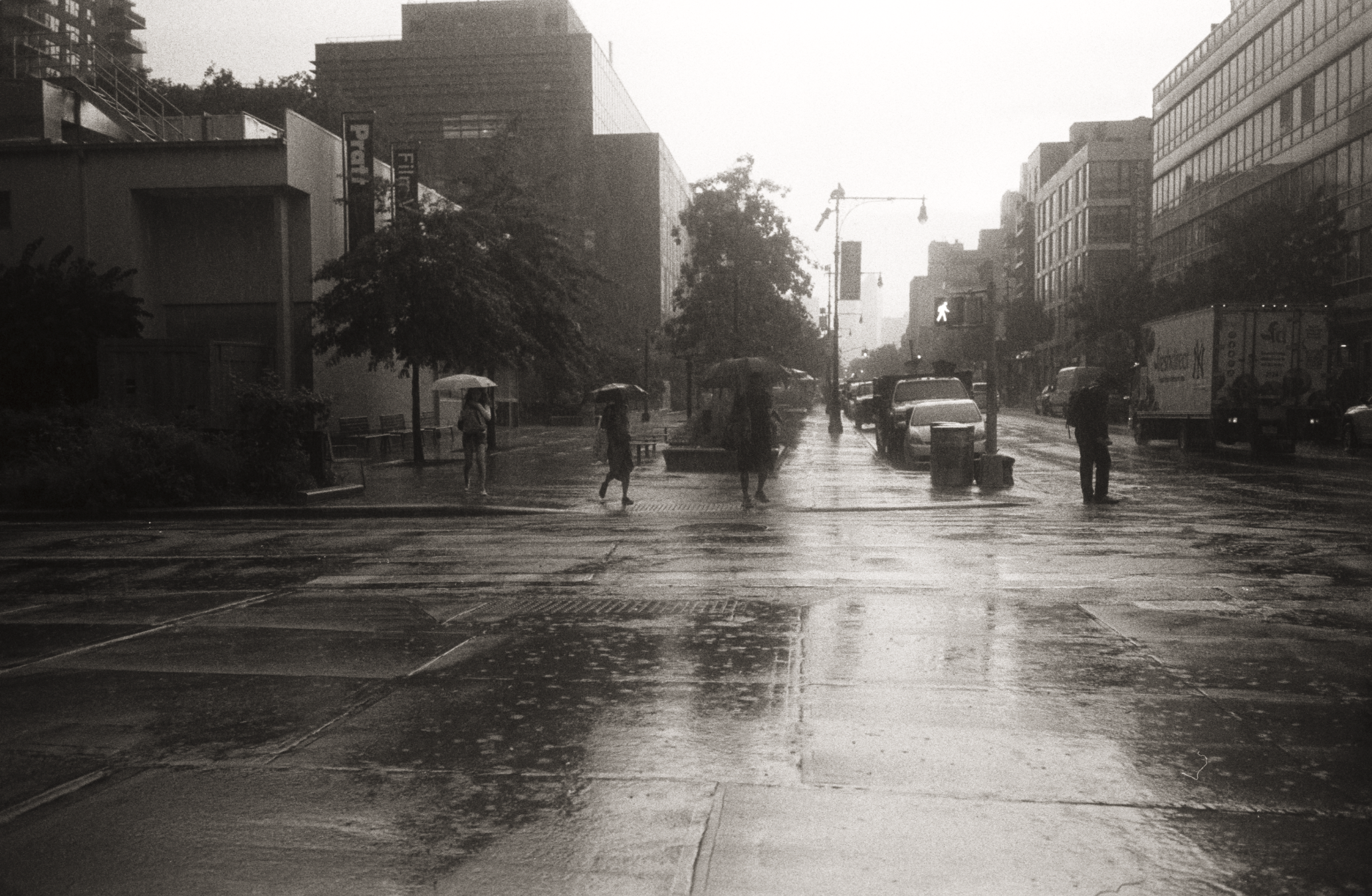
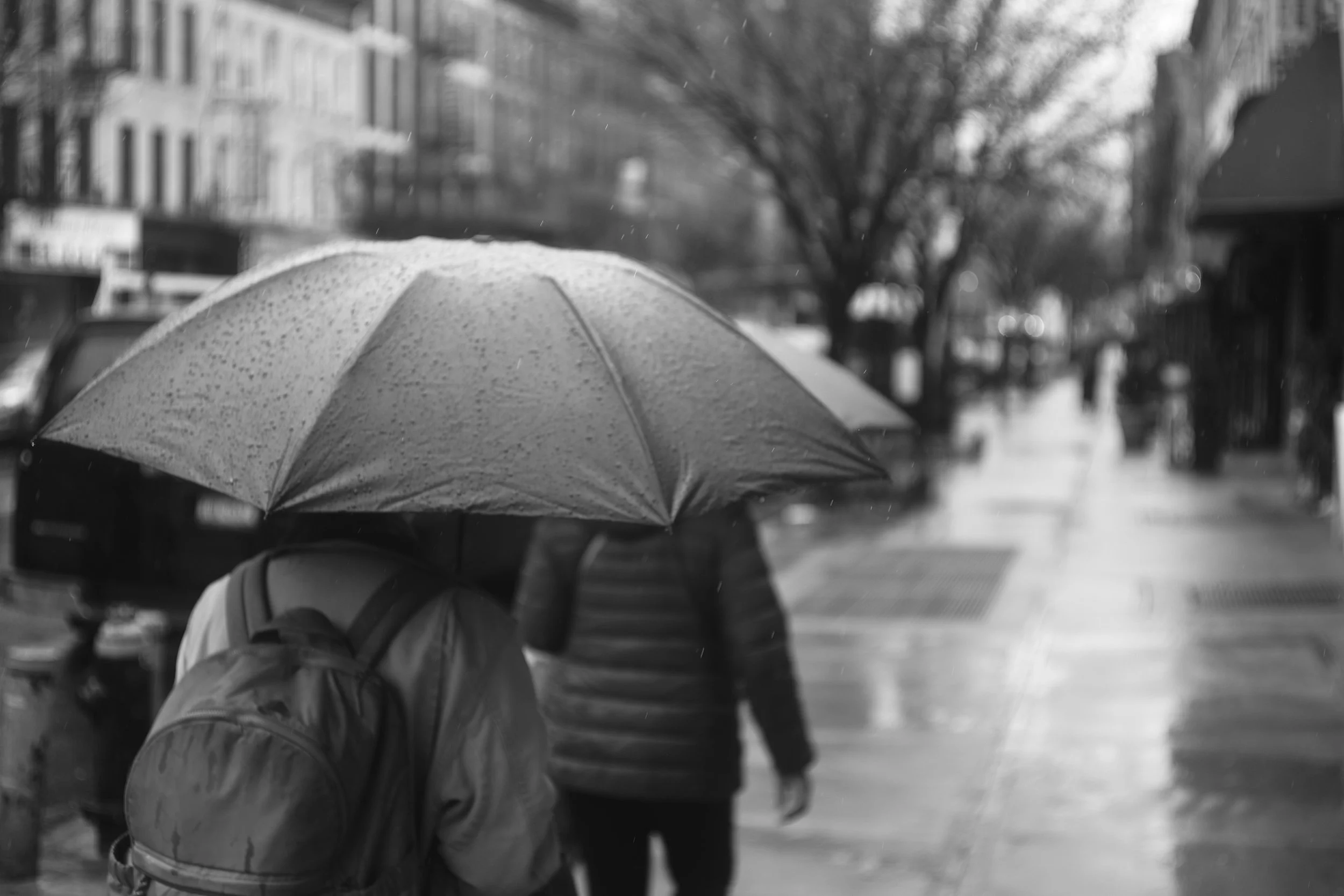
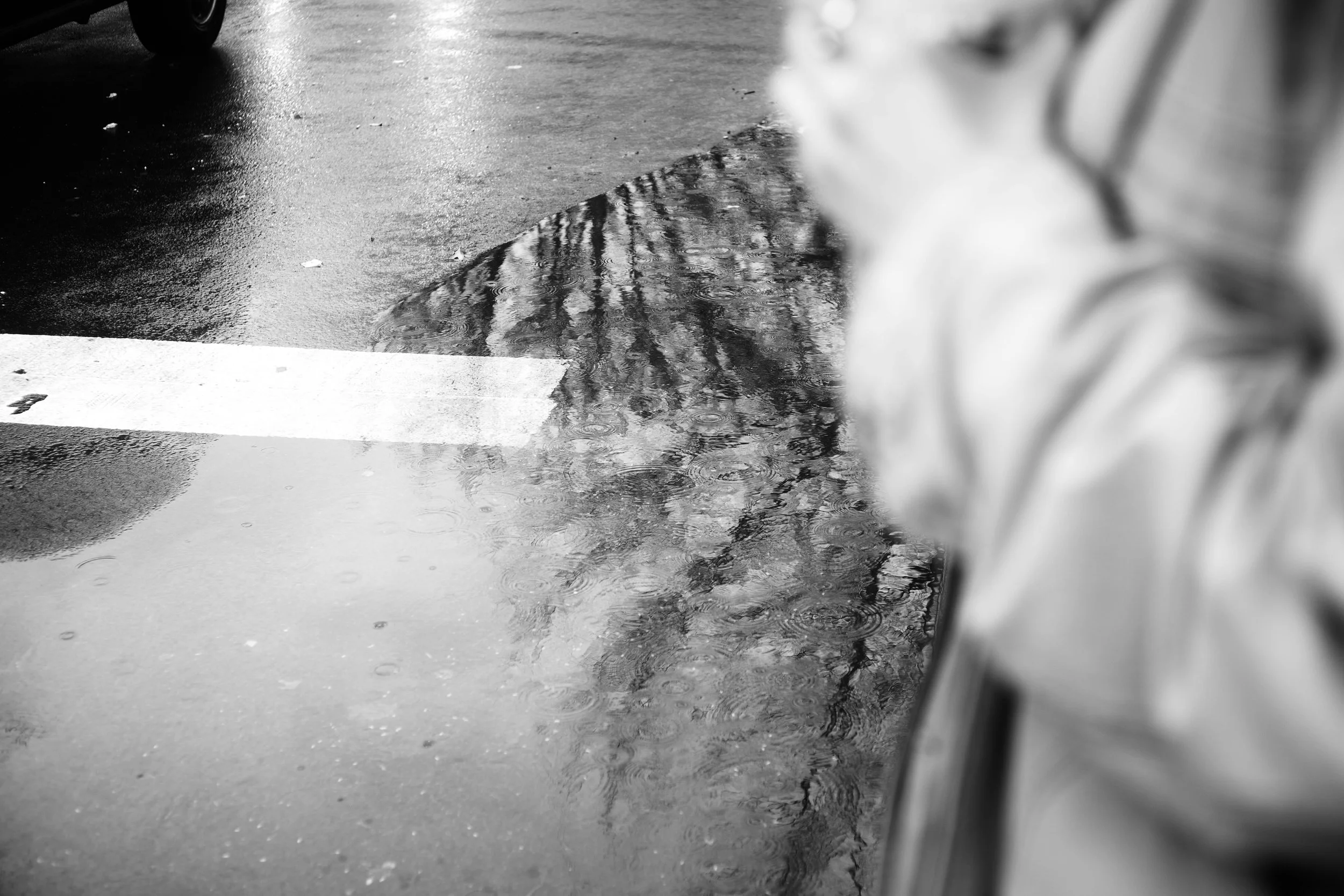
It was raining hard that week. People in the street shuffled and hopped over puddles in a sort of jig. It we were to zoom out and compress the movements of your entire day, week, year—life so far— onto a system of choreographies, what patterns would emerge? Who are we mirroring? How do we react among other choreographers around us? Are we making music for dances that have not been created? Can we dance to music that has not yet been heard?
If we are to view the body as an object in space— then it seems that these concerns are trivial, arbitrary, and predictable. But new dance is created through the synthesis of categories of (un)common dances that occur in our periphery. When we observe, we delineate ‘turning a door handle,’ ‘looking both ways before crossing the street,’ and ‘hugging’ as gestures belonging to site specific entities that have laws, customs, and traditions built in around them.
To unbuild is to see differently. It is to diffract space through motions that belong together, because they are re-interacting in space that has yet to be invented.
It is inventing without realizing it.
The music that day was recorded at my grandmother’s house. I play the piano and record bits and pieces and rarely listen to music that I make in open spaces, much less— with someone to interpret sound as dance. The patterns became movements that mimicked key strokes and resonance while providing dimensionality to a sound that on its own is trapped within the confines of an Mp3 file.
The piano is no longer there and the house is empty. When my grandmother died a month or so later, I realized I had recorded the last song there and then, with the voices of my family members dotting the backspace of the music, inadvertently becoming the texture and layering effect that Natalie creates when thinking about ‘anything’ as being worthy of dance.